

What Is Keratoconus?
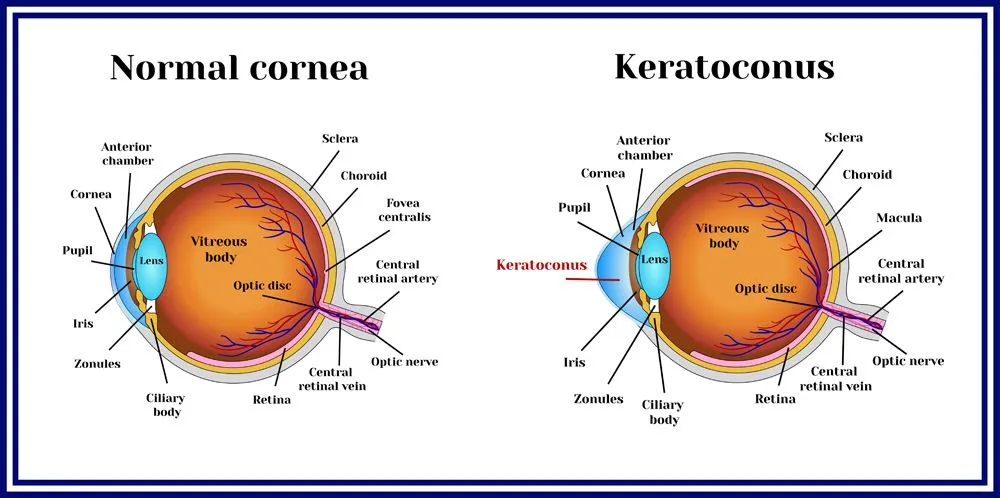
Keratoconus is a condition in which the cornea, the clear front surface of the eye, becomes thin and gradually bulges into a cone-like shape. This change affects how light enters the eye, and vision may become distorted or blurry. The condition often develops during the teenage years or early adulthood. It may progress slowly, and early detection is important for effective management.
What Are Common Symptoms?
Symptoms of keratoconus can depend on severity. Blurred vision is often the first sign, and it may not improve with standard eyeglasses. Increased sensitivity to light and glare is also common. Patients may notice frequent changes in their prescription, and night vision may become more difficult. If these symptoms are present, visit an eye doctor for evaluation.
What Causes Keratoconus?
The exact cause of keratoconus is not fully understood, but several factors may contribute. Genetics can play a role, and individuals with a family history may have a higher risk. Environmental factors, such as excessive eye rubbing, may also contribute to corneal changes. Underlying conditions like allergies can increase irritation, which may lead to more frequent eye rubbing. A thorough examination by an optometrist is necessary to assess risk factors.
How Is Keratoconus Diagnosed?
Keratoconus is diagnosed through a comprehensive eye exam. Advanced imaging techniques, such as corneal topography, are used to map the shape of the cornea. These tests are painless, and detailed information about corneal structure is obtained. Early diagnosis allows for better management. Regular eye exams are recommended, especially if symptoms are present or risk factors exist.
What Are Treatment Options?
Keratoconus treatment depends on the severity of the condition. In the early stages, specialized contact lenses may be prescribed to improve vision. These lenses help create a smoother surface for light to enter the eye.
As the condition progresses, other treatments may be considered. Corneal cross-linking is a procedure that strengthens the corneal tissue, and it may slow progression. In advanced cases, surgical options such as corneal transplantation may be recommended.
When to See an Eye Doctor in Elko, NV
You should schedule an eye exam if you experience persistent vision changes or discomfort. At Total Eyecare in Elko, NV, patients receive attentive and thorough care. To learn more or schedule an appointment, call our office at (775) 738-8491. If you are looking for an eye doctor near you, our dedicated team is available to guide you through diagnosis and keratoconus treatment, helping you maintain clear and comfortable vision.